
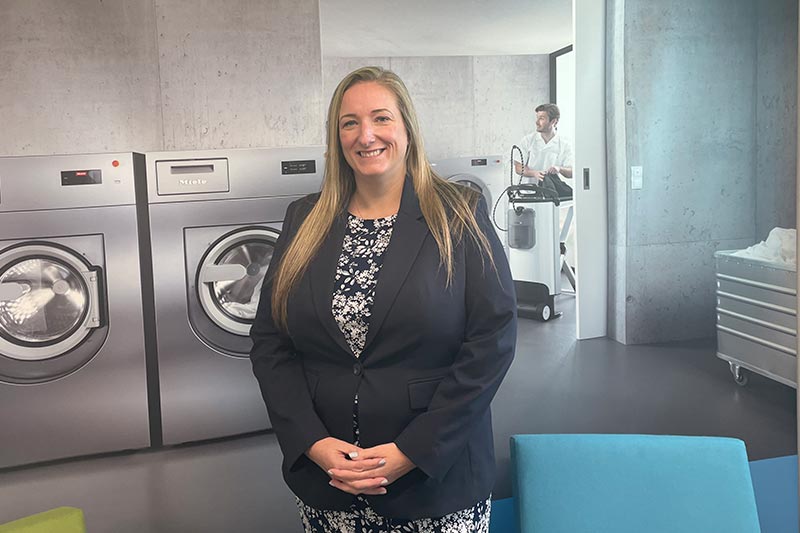
Nicky Whittaker is Business Development Manager at JTM Service and has more than 16 years’ experience in the commercial laundry industry. She works closely with care providers, helping them choose the right laundry equipment for their individual requirements. In this article, Nicky explains how to choose the right size commercial washing machine for a care home, and shares five key things to consider before deciding which equipment is right for you.
1. Start with how much laundry you need to process
As a general rule of thumb, allow around 0.5kg of laundry per resident, rising to around 0.75kg in homes with higher levels of incontinence. However, this should only be a starting point when deciding what machine capacity you need.
One of the first things I look at is how much laundry a care home actually needs to process. Two homes with the same number of residents can have very different laundry requirements.
Think about your busiest days rather than just an average day, and consider bedding, towels, residents’ clothing, staff uniforms and any other items you wash on site. Occupancy, how frequently linen is changed and the needs of your residents can all make a difference.
2. Bigger isn’t always better
Choosing a larger machine than you need doesn’t necessarily give you a better laundry. An undersized machine can result in repeated cycles, backlogs and pressure on staff. But an oversized machine can be regularly underloaded, using more energy and water than necessary, increasing running costs and taking up valuable space.
The aim is to have enough capacity to comfortably process your laundry on busy days, with some additional capacity for unexpected demand.
3. One large washing machine or two smaller machines?
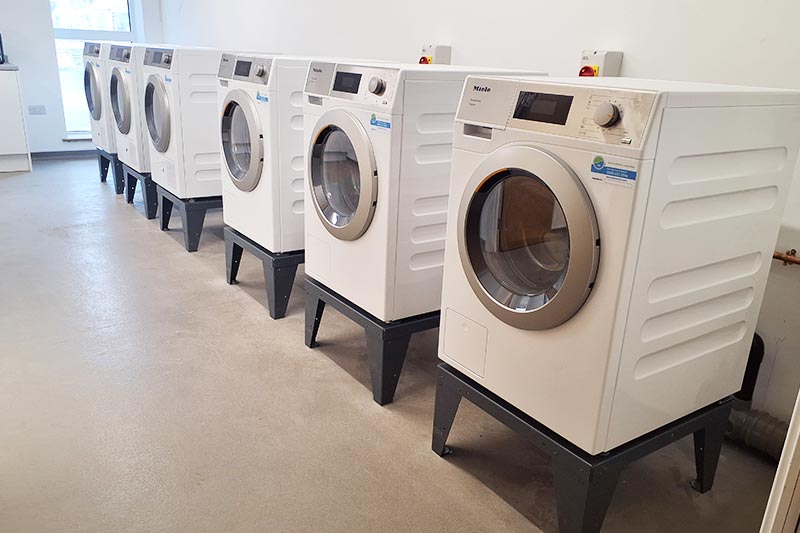
Capacity doesn’t necessarily have to come from one large washing machine. For many care homes, two appropriately sized machines can provide greater flexibility. Different types of laundry can be processed at the same time, smaller or urgent loads can be washed without disrupting your main laundry schedule, and you still have some washing capacity available if one machine is being serviced.
This is why I always look at the combination of machines rather than simply the capacity of an individual washer. The right solution is the one that works best for how that particular laundry operates.
4. Make sure your tumble dryers can keep up
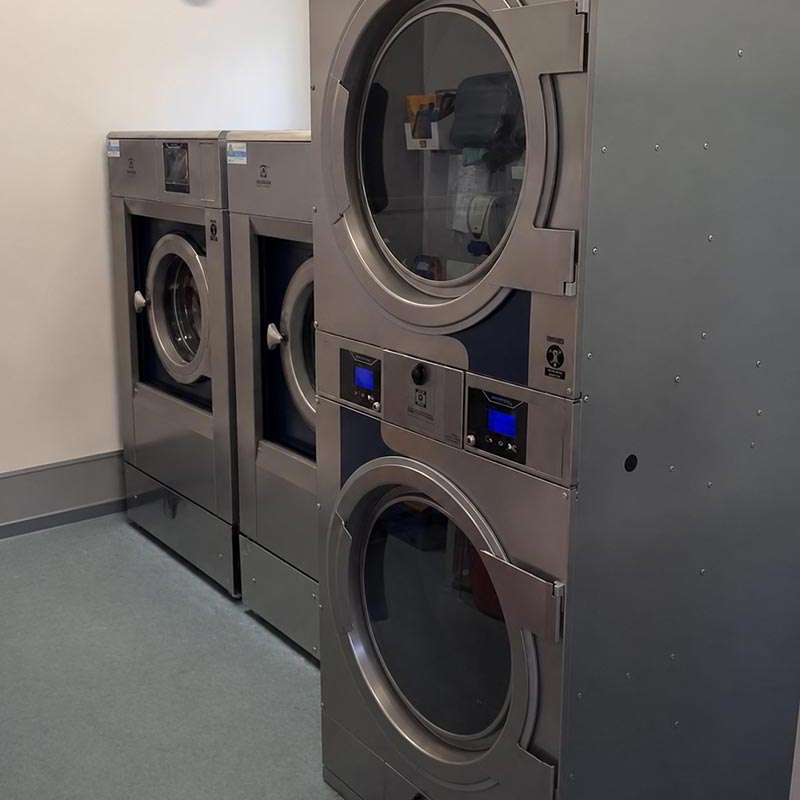
Choosing the right washing machines is only part of the equation. Your tumble dryers need to be able to keep up with the amount of laundry coming out of your washers.
This is particularly important with bulky items such as bedding and towels, which need sufficient room to tumble effectively. The extraction performance of your washing machines also makes a difference, as removing more water during the wash cycle can reduce drying times. There is little benefit in increasing your washing capacity if drying simply becomes the next bottleneck.
5. Look at your whole laundry
Machine capacity is important, but it shouldn’t be considered in isolation. The space available, how laundry moves through the room, access for loading and unloading, utilities and your infection-control requirements can all influence which equipment is right for you. You should also consider whether your requirements could change if occupancy or care needs increase.
That’s why choosing the right equipment starts with understanding how your laundry actually works, rather than simply comparing the kilogram capacity of different machines.
So, what size commercial washing machine do you need?
There isn’t one answer that’s right for every care home. Resident numbers provide a useful starting point, but your actual laundry volumes, the types of items you’re washing, the time available to process them and how your laundry operates all need to be considered.
My advice is to start with what you need your laundry to achieve, rather than simply choosing a machine based on its size. I want to understand how a customer’s laundry works, what challenges they have and what they need from their equipment. We can then help them choose the right combination of washing machines and tumble dryers for their needs.
Nicky Whittaker, Business Development Manager, JTM Service