
Practical advice from Wendy McLorg, Business Development Manager at JTM Service
With energy prices continuing to place pressure on organisations across every sector, reducing running costs has never been more important. Whether you operate a care home, hotel, housing association, school or commercial laundry, your on-premise laundry can account for a significant proportion of your utility bills.
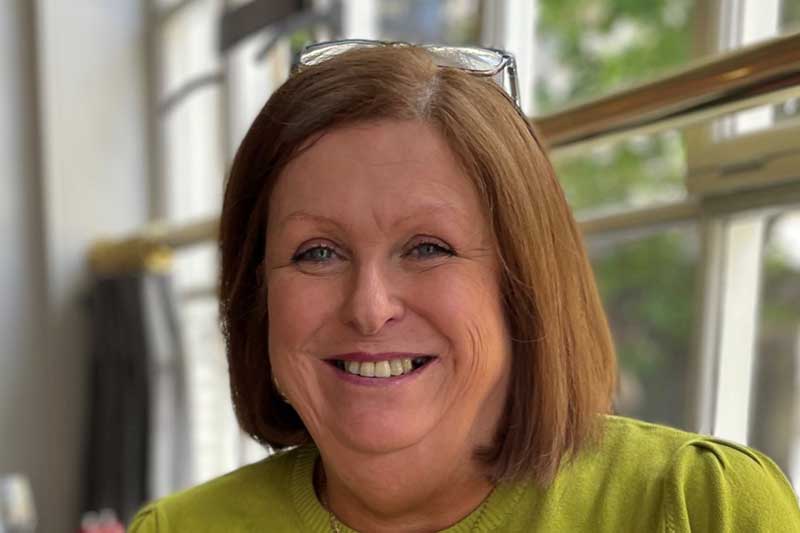
I’m Wendy McLorg, an Account Manager at JTM Service, and I’ve worked in the commercial laundry industry for more than 33 years. During that time, I’ve helped organisations choose, maintain and replace commercial laundry equipment. One question I’m being asked more than ever is how organisations can reduce their laundry running costs.
The good news is that reducing energy consumption isn’t simply about buying new equipment. In many cases, small changes to the way your existing laundry is operated and maintained can make a significant difference, while knowing when it’s the right time to invest in new technology can deliver substantial long-term savings.
Here are some of the biggest opportunities I see to reduce energy consumption in commercial laundries.
Start by understanding where your energy is being used
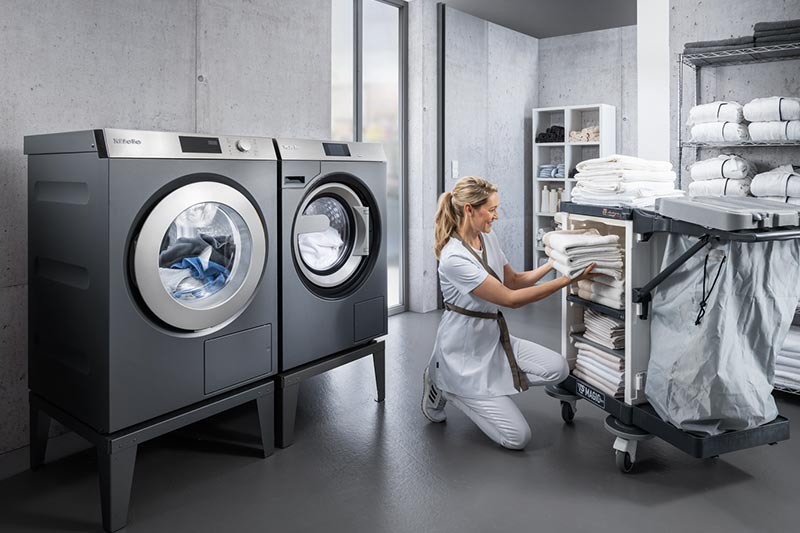
Many people assume that the washing machines use the most energy, but in most commercial laundries it’s actually the tumble dryers.
Drying laundry requires a considerable amount of heat to remove moisture, making tumble dryers the biggest consumers of energy in many on-premise laundries.
The interesting part is that reducing drying costs actually starts with the washing machine.
Modern high-spin commercial washing machines remove much more water during the final spin cycle, meaning laundry enters the tumble dryer with significantly less residual moisture. The dryer therefore has less work to do, reducing drying times, lowering energy consumption and increasing throughput.
This is why it’s important to look at your laundry operation as a complete process rather than individual pieces of equipment.
Common mistakes that quietly increase energy costs
One of the biggest misconceptions is that high energy bills are simply unavoidable. In reality, I regularly see businesses unknowingly increasing their own running costs through everyday practices.
Some of the most common examples include:
- Reducing the electrical power available to new machines. Sometimes machines are installed with reduced electrical ratings because the site’s electrical supply hasn’t been upgraded. While this can appear to save money initially, it usually increases cycle times, meaning machines run for longer, consume more electricity and place additional strain on heating elements.
- Overloading washing machines. Overloading reduces wash performance, often leading to items being washed again. Every repeat cycle uses additional electricity, water and detergent, while increasing drying times.
- Underloading machines. Running half full loads wastes water, electricity and staff time.
- Using the wrong wash programmes. Selecting unnecessarily high temperatures or unsuitable programmes can significantly increase energy consumption. For most everyday laundry, modern commercial equipment can achieve excellent wash results at lower temperatures, although infected or heavily soiled items should always be processed using the correct programme.
- Opening tumble dryer doors before the programme has finished. Every time the door is opened, valuable heat escapes, extending drying times and increasing energy consumption.
- Poor airflow. Dirty lint filters, blocked ventilation or poorly maintained ducting all reduce airflow, making dryers work harder than necessary.
- Leaving equipment running when not in use. Even something as simple as leaving a roller ironer switched on unnecessarily contributes to higher energy bills.
Individually these issues might seem minor, but together they can have a significant impact on annual running costs.
Wendy’s Top Tips for Reducing Laundry Energy Costs
The good news is that there are several practical steps organisations can take without making major changes to their laundry.
- Load machines correctly
Avoid both overloading and underloading. Correct loading improves wash performance, reduces repeat cycles and helps make the best use of water and electricity.
- Choose the right wash programmes
Many organisations automatically wash at higher temperatures than necessary. Modern commercial equipment is capable of delivering excellent cleaning performance at lower temperatures for most everyday laundry, helping to reduce energy consumption.
- Keep tumble dryers working efficiently
Because tumble dryers are often the largest energy users, even small improvements can make a noticeable difference.
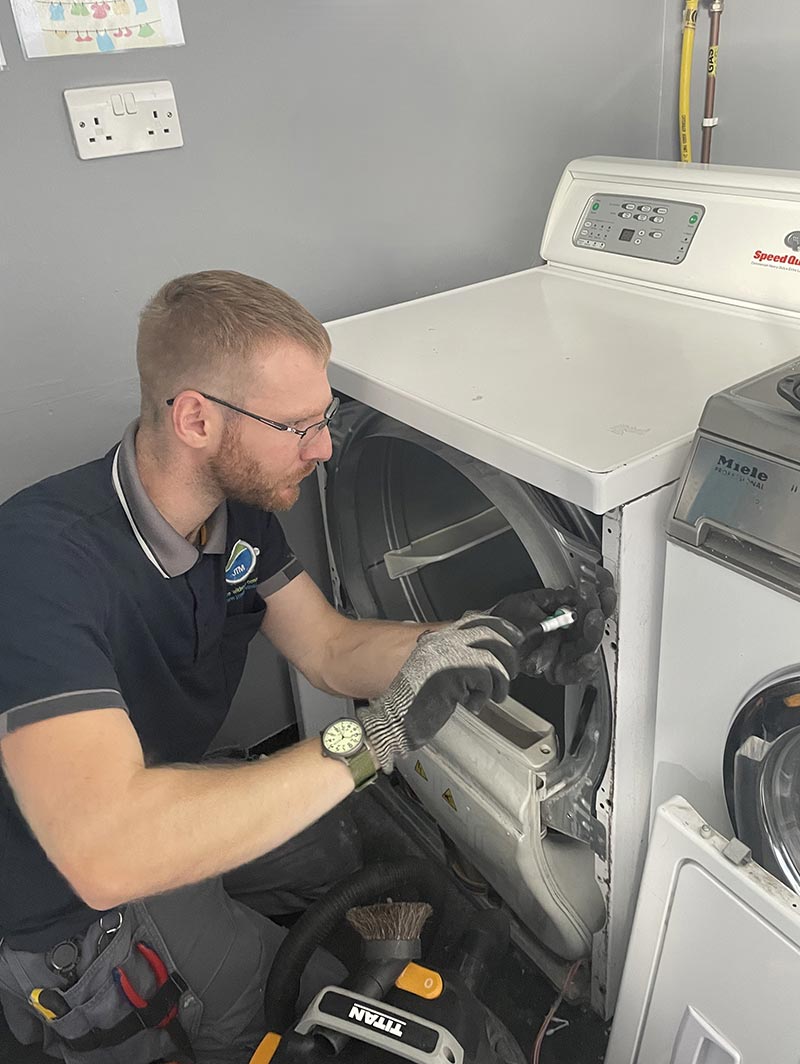
Clean lint filters after every drying cycle, ensure ventilation systems are regularly maintained and keep ducting as short and smooth as possible to maximise airflow. Good airflow allows dryers to operate more efficiently, reducing both drying times and energy consumption.
- Don’t overlook preventative maintenance
Regular servicing doesn’t just reduce breakdowns, it helps equipment continue operating at peak efficiency.
Keeping machines clean, correctly adjusted and free from developing faults helps reduce unnecessary energy consumption while extending the life of the equipment.
- Preventative maintenance is an investment, not a cost
Many organisations only think about servicing when something breaks. In reality, planned preventative maintenance is one of the most effective ways of protecting both your equipment and your operating costs.
Regular servicing helps identify developing faults before they become expensive breakdowns, keeps machines operating efficiently and ensures they continue performing as the manufacturer intended.
A well-maintained commercial laundry machine is often more reliable, more efficient and less expensive to operate than one that only receives attention when it fails.
Just as importantly, preventative maintenance helps maximise the lifespan of your equipment, delaying unnecessary replacement while maintaining compliance with health, safety and hygiene requirements.
When does replacing equipment become the better option?
I don’t believe organisations should replace machines simply because they’ve reached a certain age.
The real question is whether they’re still delivering good value.
If repair costs are increasing, breakdowns are becoming more frequent, downtime is disrupting operations and utility bills continue to rise, replacing the equipment may actually be the more economical decision.
A well maintained commercial washing machine, tumble dryer or ironer can provide many years of reliable service, but there comes a point where advances in technology mean newer equipment offers significantly lower running costs.
The key is understanding where that tipping point lies.
Why the cheapest machine isn’t always the cheapest option
When comparing quotations, it’s perfectly understandable to focus on the purchase price. However, the purchase price is only one part of the total cost of ownership.
Over the lifetime of a commercial washing machine, tumble dryer or ironer, organisations also need to consider:
- Energy consumption
- Water consumption
- Detergent usage
- Maintenance and repair costs
- Downtime
- Equipment lifespan
A machine that costs less to buy may ultimately cost considerably more to own.
Leading manufacturers such as Miele Professional and Electrolux Professional continue to invest heavily in technologies that reduce both water and energy consumption. Features such as intelligent load sensing, high-spin extraction and heat pump tumble dryers can significantly reduce lifetime operating costs.

For example, modern commercial heat pump tumble dryers can reduce energy consumption by more than 60% compared with previous generation condenser dryers and vented dryers, making them one of the biggest opportunities for reducing ongoing laundry costs. Likewise, the latest Miele Professional Benchmark washing machines reduce water and energy consumption by up to 12%, while their high-speed BoostSpin extraction leaves less moisture in the load, reducing drying times. Electrolux Professional’s Line 6000 washing machines also feature technologies such as Automatic Savings and Power Balance, automatically adjusting water consumption to suit the load while improving extraction performance to reduce drying time.
Rather than focusing solely on today’s purchase price, I always encourage customers to consider what the equipment will cost to own over the next 10 to 15 years.
My advice
If I could leave organisations with one piece of advice, it would be this: take a long-term view.
I’ve seen enormous advances in commercial laundry technology during my career, but reducing running costs isn’t about one single decision. It’s about operating your equipment correctly, maintaining it properly and knowing when replacement genuinely makes financial sense.
Just as importantly, work with a supplier you trust.
An experienced commercial laundry partner won’t simply recommend new equipment. They’ll help you get the very best from your existing machines, advise when repairs remain the most cost-effective option and, when the time is right, recommend replacement solutions that deliver genuine long term value.
When it comes to reducing laundry running costs, informed decisions always outperform short-term savings.
About the Author
Wendy McLorg is an Account Manager at JTM Service and has worked in the commercial laundry industry for more than 33 years. She advises organisations across sectors including care, hospitality, housing and the public sector on commercial laundry equipment, helping them reduce operating costs and choose solutions that deliver long-term value.