
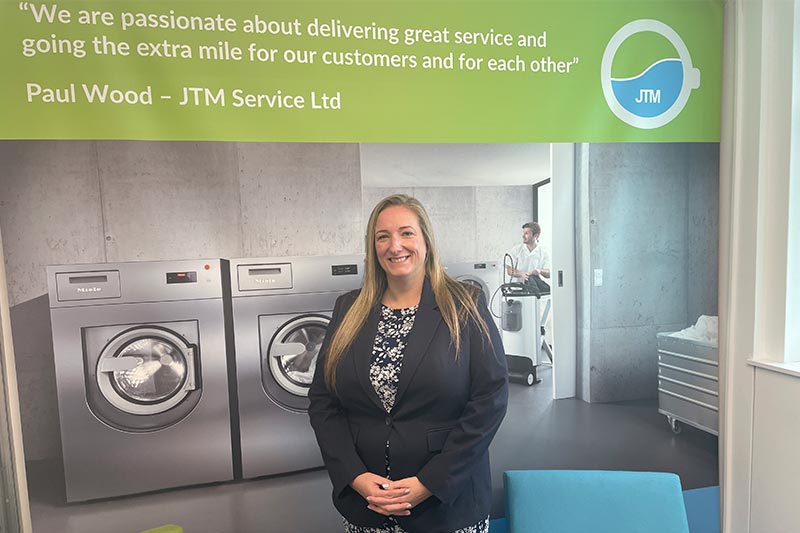
Nicola Whittaker, is Business Development Manager for JTM Service. In this article, Nicola explains why infection control in an on-premise laundry is so important.
Insights from 16 Years in the Industry
Hi, I’m Nicola Whittaker—though Nicky or Nic works too! I’m a wife, mother, and friend, and during the week, I’m proud to be a Regional Business Development Manager for JTM Service. After 16 years in the commercial laundry and dishwasher industry, I’m still passionate about what I do—especially when it comes to helping businesses in the Care Sector. They do an incredible job looking after our communities, and I love supporting them to ensure their laundry operations run smoothly and safely.

Why Infection Control Is So Important In Care
Infection control isn’t just a box to tick—it’s a critical safeguard for residents and staff. Many care home residents have reduced immune systems, making them vulnerable to illnesses that could lead to serious complications or even death. Beyond health risks, outbreaks like Norovirus can wipe out staff availability, leaving homes short-staffed and struggling to maintain care standards.
The ripple effects don’t stop there:
- Restricted family visits during outbreaks can cause emotional distress.
- Financial implications arise from extra PPE, staffing challenges, and process changes.
Simply put: infection control protects lives, relationships, and resources.
Why Laundry Is a High-Risk Area
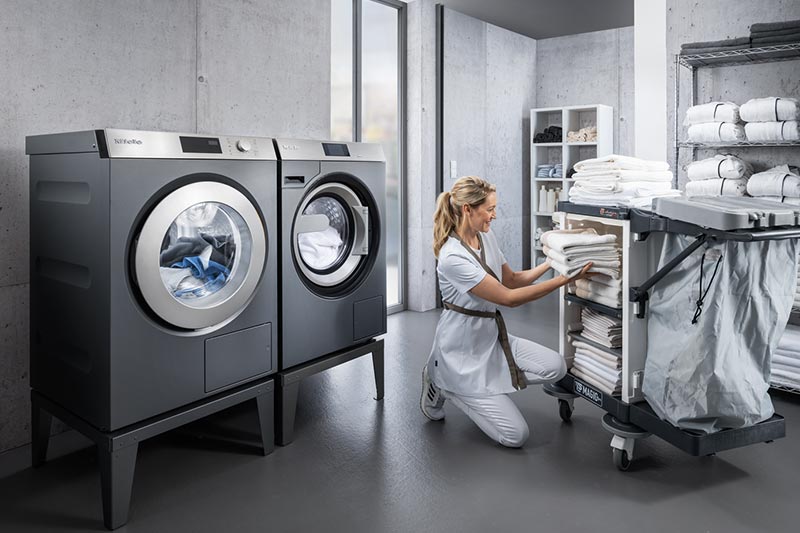
The on-premise laundry room is unique—it’s the point where soiled, contaminated garments meet clean items. Without proper infection control, this space can become a hub for cross-contamination. A well-managed laundry doesn’t just clean clothes; it actively reduces the spread of infectious diseases.
Who Needs to Prioritise Infection Control?
While every business should care about hygiene, it is absolutely critical for:
- Care Homes & NHS facilities
- Food manufacturing sites
- Veterinary practices
- Nurseries, spas, and salons (especially post-Covid)
Anywhere you are dealing with vulnerable people, contamination, or food safety, infection control is non-negotiable.
Main Risks and Common Mistakes
The biggest risk is spreading infections to residents, customers, or staff – and in severe cases this can lead to death.
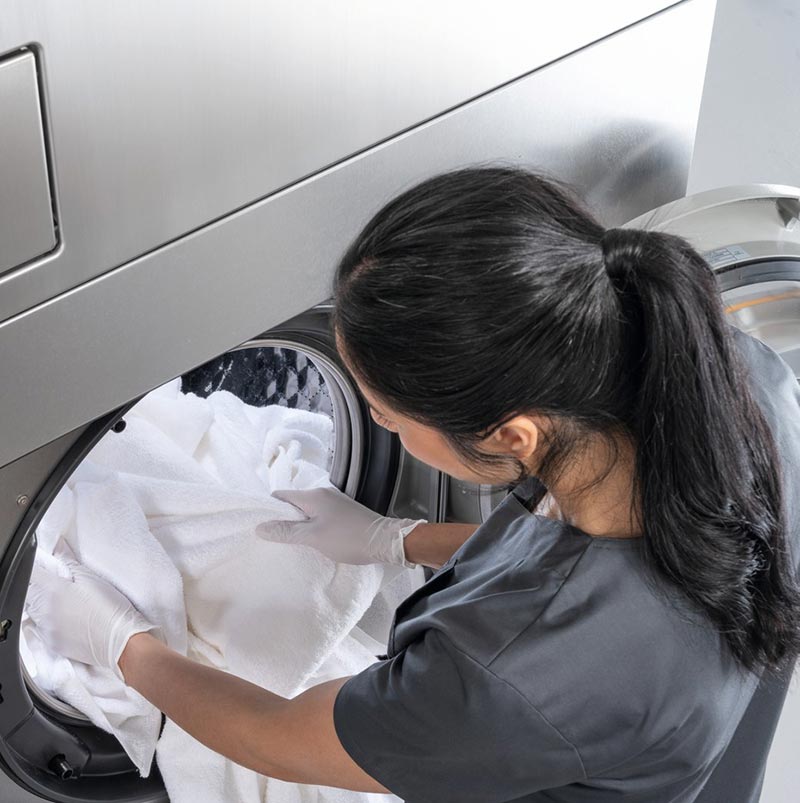
One common mistake I see often is with pre-sorting infected laundry. If an item is infectious, it should go into a water-soluble red bag at source, then into an impermeable outer bag for transport. Staff should never open these bags to pre-sort—they’re putting themselves at high risk.
Modern commercial laundry machines are designed to handle this safely:
- They open the red bag automatically.
- They pre-sluice and run a thermal disinfection cycle.
- They leave items safe for drying.
Another common mistake is overfilling the washing machine—this prevents the red bag from opening properly and compromises the wash.
Top Tips for Best Practice
Some of the key things to focus on to improve hygiene and infection control are:
- Segregate clean and dirty laundry to prevent cross-contamination.
- Use correct PPE and follow strict handwashing protocols.
- Ensure machines have validated disinfection programmes.
- Train staff regularly on infection control procedures.
How JTM Service Can Help
We have over 40 years’ experience in laundry, and we are specialists in the Care sector. One way we can help is through a free laundry audit to assess:
- Equipment suitability
- Laundry flow and layout
- Process compliance
From there, we provide tailored recommendations to strengthen your infection control measures and keep your environment safe.
Final Thought
Infection control isn’t just about compliance – it’s about care. By getting laundry right, we protect the people who matter most.
By Nicola Whittaker, Business Development Manager, JTM Service.